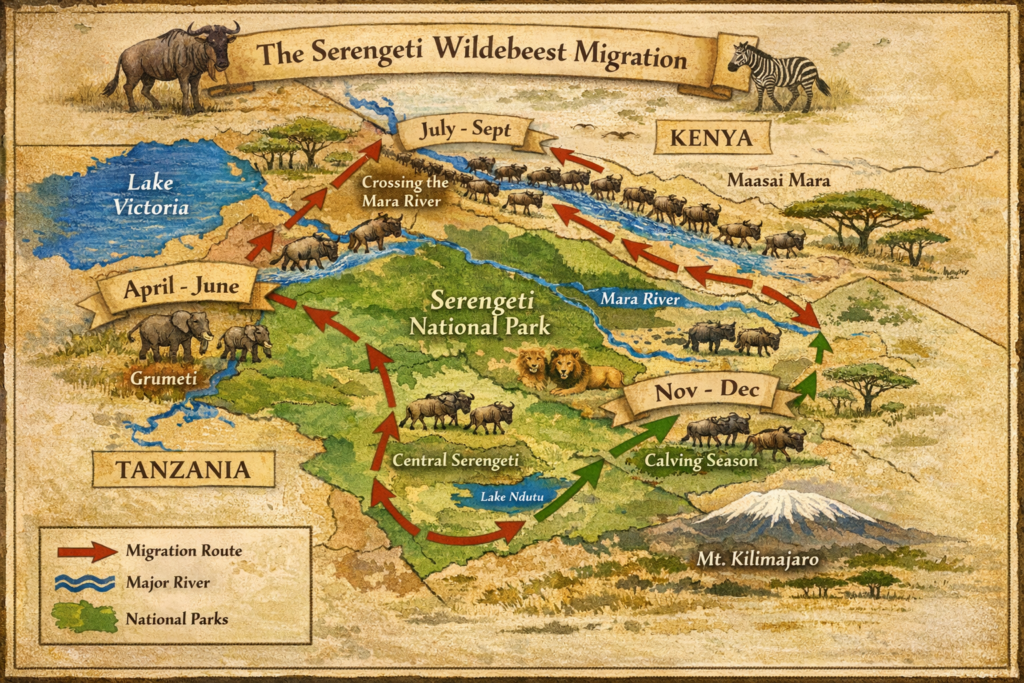
Serengeti Wildebeest Migration Calving Season: A Spectacle of Life and Survival
Serengeti wildebeest migration calving season occurs from January to March, peaking in February in the southern Serengeti and Ndutu plains. This period offers the best opportunity to see newborn calves, predator interactions, and lush green landscapes, making it one of the top times for a Tanzania safari.
- Timing:
The calving season is primarily from late January to early March, with February being a peak period for births.
- Location:
The calving takes place in the southern Serengeti, including the Ndutu area, and extends into the western part of the Ngorongoro Conservation Area.
- Why it happens:
Wildebeest move to the southern Serengeti to give birth in the lush grasslands where there are abundant food sources for the newborn calves and the mothers.
- Impact on the ecosystem:
The calving season brings a large concentration of wildlife to the area, creating a dynamic ecosystem where predators also benefit from the abundant prey.
- Viewing:The calving season is a popular time for visitors to witness the migration and the birth of thousands of wildebeest calves.
Serengeti wildebeest migration calving season is the period from January to March when over 500,000 wildebeest calves are born across the southern plains of Serengeti National Park. This is the best time to witness dramatic predator-prey interactions, lush green landscapes, and one of the most intense wildlife spectacles on Earth—making it a top choice for a Tanzania safari. During this time, an astonishing 8,000 calves are born daily, transforming the plains into a bustling nursery. The short, nutrient-rich grasses of the southern Serengeti provide the perfect environment for calving, offering essential nutrients for lactating mothers and their newborns.
For planning your trip, explore the full guide to the Serengeti wildebeest migration and discover top itineraries for a Serengeti wildebeest migration safari.
What is the Serengeti Wildebeest Migration Calving Season?
The Serengeti wildebeest migration calving season occurs between January and March, peaking in February, when hundreds of thousands of calves are born in the nutrient-rich grasslands of southern Serengeti and Ndutu. This period attracts high predator activity and offers exceptional wildlife viewing.
Why Does Calving Happen in the Southern Serengeti?
The southern Serengeti and Ndutu area are uniquely suited for calving due to:
- Nutrient-rich grasses: Essential for the growth and strength of newborn calves.
- Open plains: Provide visibility for mothers to spot predators like lions, cheetahs, and hyenas.
- Seasonal rains: The short rains from January to March ensure abundant water and fresh grazing.
This area is considered the safest and most conducive environment for wildebeest to give birth and nurture their young before embarking on the long and perilous migration northward.
Key Highlights of the Wildebeest Calving Season
- Mass Births: Over 500,000 calves are born within a few weeks, with up to 8,000 calves born each day.
- Predator Action: The abundance of vulnerable calves attracts predators, creating dramatic wildlife scenes.
- Beehive of Activity: Herds graze, calves learn to walk within minutes of birth, and predators hunt.
- Survival of the Fittest: Calves must learn to run within minutes of birth to escape predators, and only the strongest survive.
When and Where to Witness the Calving Season
- When: January to March (peak calving occurs in February).
- Where:
- Southern Serengeti: The primary calving grounds.
- Ndutu Conservation Area: Known for its open plains and high concentration of wildebeest.
- Ngorongoro Conservation Area: Some calving activity occurs here as well.
The Role of the Calving Season in the Great Migration
The calving season is the starting point of the wildebeest migration cycle. After giving birth, the herds begin their journey northward, following the rains and fresh grazing. By June, they reach the western Serengeti and prepare for the dramatic Grumeti River crossings. By July-August, they enter the Masai Mara in Kenya, where they mate before returning to the Serengeti to complete the cycle.
Why is the Serengeti Wildebeest Migration Calving Season a Must-See?
- Unique Wildlife Spectacle: Witnessing thousands of calves being born and taking their first steps is a once-in-a-lifetime experience.
- Predator-Prey Interactions: The abundance of calves attracts predators, offering incredible opportunities to witness hunts and survival strategies.
- Scenic Beauty: The lush green plains of the southern Serengeti during the rainy season are breathtaking.
Serengeti Wildebeest Migration Calving Season ( FAQ Section)
The Serengeti wildebeest migration calving season is the period from January to March when over 500,000 wildebeest calves are born in the southern plains of Serengeti National Park. This short, intense birthing window attracts predators and creates one of Africa’s most dramatic wildlife spectacles.
When is the Serengeti wildebeest migration calving season?
The calving season occurs between January and March, with peak births in February. During this time, herds gather in the southern Serengeti and Ndutu region, where nutrient-rich grasses support mothers and newborn calves, making it the best period for witnessing large-scale wildlife activity.
Where does the Serengeti wildebeest migration calving season take place?
Calving takes place in the southern Serengeti and Ndutu plains, including parts of the Ngorongoro Conservation Area. These open grasslands provide mineral-rich soil and excellent visibility, helping calves survive and allowing visitors to observe wildlife more easily during safari drives.
Why do wildebeest give birth during the same time in the Serengeti?
Wildebeest synchronize births to overwhelm predators with sheer numbers, increasing calf survival rates. This evolutionary strategy ensures that even though predators hunt actively, many calves survive due to the abundance of prey available within a short time frame.
How many calves are born during the Serengeti calving season?
Approximately 500,000 wildebeest calves are born within a few weeks, with up to 8,000 births per day at peak. This extraordinary concentration of newborns makes the calving season one of the most biologically significant wildlife events in the Serengeti ecosystem.
Is the Serengeti calving season a good time for safari?
Yes, calving season is one of the best times for a Tanzania safari because it offers high wildlife density, frequent predator sightings, and beautiful green landscapes. The experience is often less crowded than peak migration months, making it ideal for photography and immersive wildlife viewing.
What animals can you see during the Serengeti calving season?
During calving season, you can see wildebeest, zebras, gazelles, lions, cheetahs, hyenas, and jackals. Predators are especially active due to the abundance of vulnerable calves, creating intense wildlife interactions that are ideal for safari enthusiasts and photographers.
What is the best month to see wildebeest calving in the Serengeti?
February is the best month to see wildebeest calving because it marks the peak birthing period. During this time, thousands of calves are born daily, and predator activity is at its highest, offering the most dramatic and rewarding safari experiences.
How long does the Serengeti wildebeest calving season last?
The calving season lasts approximately 8 to 10 weeks, starting in January and continuing through March. While peak activity occurs in February, early and late season visits still offer excellent wildlife viewing and fewer crowds compared to peak months.
What is the weather like during the Serengeti calving season?
The weather during calving season is warm with occasional rainfall, creating lush green plains. These conditions support grazing herds and provide stunning scenery for photography, although some roads may become muddy and require experienced guides to navigate.
Can you see predators during the Serengeti calving season?
Yes, predator activity is at its peak during calving season. Lions, cheetahs, hyenas, and other carnivores take advantage of the abundance of newborn calves, making this one of the best times to witness hunting behavior and dramatic wildlife encounters.
Is February the peak of the Serengeti calving season?
Yes, February is the peak of the calving season, with the highest number of births occurring daily. This month offers the best chance to witness newborn calves, predator interactions, and the full intensity of the Serengeti migration cycle.
Where should I stay during the Serengeti calving season?
The best places to stay are in southern Serengeti or Ndutu, where the herds gather for calving. Lodges and mobile camps in these areas provide easy access to wildlife and allow you to maximize game viewing opportunities during your safari.
Are there fewer crowds during the Serengeti calving season?
Yes, the calving season generally has fewer tourists compared to peak river crossing months. This allows for a more private safari experience while still offering exceptional wildlife viewing and photography opportunities in the Serengeti.
Is the Serengeti calving season better than the river crossing season?
It depends on your preference. Calving season offers newborn animals and predator action, while river crossing season provides dramatic scenes of herds crossing crocodile-filled rivers. Both are unique phases of the migration and equally rewarding in different ways.
Can you see the Big Five during the calving season in the Serengeti?
Yes, you can see several members of the Big Five, especially lions and buffalo. For a complete Big Five experience, many travelers combine their trip with nearby Ngorongoro Crater, known for its high density of wildlife.
What makes the Serengeti calving season unique?
The Serengeti calving season is unique due to the synchronized birth of hundreds of thousands of calves within a short period. This creates intense predator-prey interactions and showcases one of the most important ecological events in Africa.
How do wildebeest calves survive predators?
Wildebeest calves survive through synchronized births, rapid mobility, and herd protection. Calves can stand and run within minutes of birth, and the sheer number of newborns reduces the likelihood of any single calf being targeted by predators.
Can I photograph wildlife during the Serengeti calving season?
Yes, calving season is one of the best times for wildlife photography. The green landscapes, soft lighting, and abundant animal activity provide excellent opportunities for capturing dramatic and memorable safari images.
What should I pack for a Serengeti calving season safari?
Pack lightweight clothing, a rain jacket, sturdy shoes, binoculars, sunscreen, and a good camera. Weather can vary due to seasonal rains, so preparation for both sunshine and occasional showers is important for a comfortable safari.
Are roads accessible during the Serengeti calving season?
Most roads are accessible, but some may become muddy due to rain. Experienced safari guides and 4×4 vehicles are essential for navigating the terrain and ensuring you reach the best wildlife viewing areas safely.
Do all wildebeest calves survive the calving season?
No, not all calves survive due to predation and natural challenges. However, the synchronized birthing strategy ensures that a large number of calves survive despite these risks, maintaining the population balance.
How does the calving season fit into the Great Migration?
The calving season marks the beginning of the migration cycle, when herds gather in the south before moving north in search of fresh grazing. It is a critical phase that supports the continuation of the entire migration.
Can I combine calving season with other Tanzania parks?
Yes, many safari itineraries combine Serengeti with parks like Tarangire National Park or Ngorongoro, offering diverse wildlife experiences and maximizing your time in Tanzania.
How far in advance should I book a calving season safari?
It is best to book 6 to 9 months in advance, especially for February travel. Early booking ensures access to the best lodges and guides during this popular wildlife viewing period.
What time of day is best for viewing calving activity?
Early morning and late afternoon are the best times for viewing wildlife activity. These cooler periods increase animal movement and provide optimal lighting conditions for photography.
Is the Serengeti calving season suitable for families?
Yes, it is suitable for families, as wildlife is abundant and easy to spot. Many lodges offer family-friendly accommodations and guided safaris designed to provide safe and educational experiences.
Can you see other animals migrating during the calving season?
Yes, zebras and gazelles migrate alongside wildebeest, creating a diverse and dynamic ecosystem. Their presence also contributes to predator activity and enhances the overall safari experience.
What is the difference between calving season and migration season?
Calving season focuses on birth and predator interactions in the south, while migration season involves movement across the Serengeti, including river crossings in the north. Both are key phases of the annual wildlife cycle.
Why is the Serengeti wildebeest migration calving season famous?
The calving season is famous for its scale, with hundreds of thousands of births occurring in a short time. Combined with intense predator activity, it creates one of the most spectacular and sought-after safari experiences in Africa.
Planning a Safari During the Serengeti Wildebeest Migration Calving Season
If you’re planning to witness the Serengeti Wildebeest Migration Calving Season, here’s what you need to know:
- Best Time to Visit: Late January to early March.
- Where to Stay:
- Ndutu Safari Lodge
- Serengeti Serena Lodge
- Mobile camps that follow the migration.
- What to Expect:
- Game drives across the plains.
- Guided by expert rangers to spot calving herds and predator action.