Complete Guide: Best Time to See Wildebeest Migration in Serengeti
The Great Wildebeest Migration is one of the most spectacular wildlife events on Earth, involving over 1.5 million wildebeest, accompanied by zebras and gazelles, moving across the ecosystems of Tanzania and Kenya.
If you’re planning a Serengeti safari, timing is everything. This guide will show you exactly when and where to go, depending on your travel goals, budget, and preferred wildlife experiences.
Best time to see Wildebeest migration in Serengeti National Park
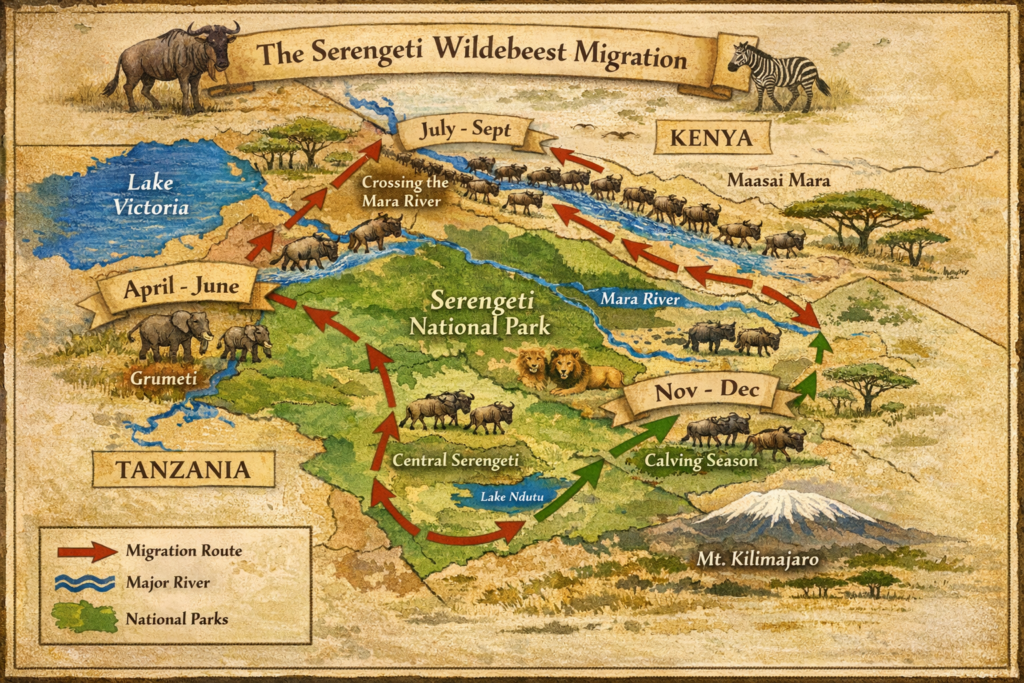
The best time to see the wildebeest migration in Serengeti National Park depends on the experience you want. For dramatic river crossings, visit between July and September in the northern Serengeti near the Mara River. For calving season and predator action, travel between January and March in the southern Serengeti plains. The migration is a year-round cycle, so excellent wildlife viewing is possible at any time.Here’s a month-by-month breakdown of the migration cycle:
January to March: Calving Season in Southern Serengeti
- Location: Southern Serengeti, Ndutu, and Ngorongoro Conservation Area.
- Highlights:
- Over 500,000 wildebeest calves are born, with up to 8,000 calves born daily.
- Predators like lions, cheetahs, and hyenas are abundant, drawn by the vulnerable newborns.
- The plains are lush and green, thanks to the short rains (November-December) and long rains (February-March).
- Best For: Calving season, predator-prey interactions, and fewer crowds.
April to June: Movement to Central and Western Serengeti
- Location: Central Serengeti and Western Corridor (Grumeti River).
- Highlights:
- The herds move from the southern plains to the central and western Serengeti.
- By May-June, the wildebeest reach the Grumeti River, where dramatic river crossings occur.
- The landscape is green and lush, with fewer tourists compared to peak season.
- Best For: Grumeti River crossings and exploring the central Serengeti.
July to October: Northern Serengeti and Masai Mara Crossings
- Location: Northern Serengeti (Tanzania) and Masai Mara (Kenya).
- Highlights:
- The herds arrive in the northern Serengeti and cross the Mara River, one of the most dramatic events of the migration.
- The Mara River crossings are unpredictable and thrilling, with crocodiles and predators adding to the drama.
- This is also the mating season for wildebeest.
- Best For: Mara River crossings, predator action, and the climax of the migration.
November to December: Return to Southern Serengeti
- Location: Southern Serengeti and Ndutu.
- Highlights:
- The herds begin their journey back to the southern Serengeti and Ndutu.
- The short rains (November-December) rejuvenate the grasslands, preparing the area for the next calving season.
- Pregnant wildebeest return to the southern plains to give birth, completing the cycle.
- Best For: Seeing the herds on the move and enjoying lush, green landscapes.
Best Locations to Witness the Serengeti Wildebeest Migration Season
Southern Serengeti (January-March)
- Ndutu Conservation Area: The heart of the calving season.
- Ngorongoro Conservation Area: offers stunning backdrops for wildlife photography.
Central Serengeti (April-June)
- Seronera River Valley: Known for its resident wildlife, including tree-climbing lions and leopards.
- Grumeti River: Famous for early river crossings.
Northern Serengeti (July-October)
- Mara River: The most iconic crossing point.
- Kogatende Area: Offers excellent views of the migration.
Best Time to See Wildebeest Migration in Serengeti – FAQ
What is the best time to see the wildebeest migration in the Serengeti?
The best time to see the wildebeest migration in the Serengeti National Park depends on the event you want to witness. River crossings occur from July to October, while calving season happens from January to March in the southern plains, offering dramatic predator-prey action.
When do wildebeest river crossings happen in the Serengeti?
Wildebeest river crossings typically occur between July and October in the northern Serengeti National Park. This is when herds cross the dangerous Mara River, facing crocodiles and strong currents, making it one of the most dramatic wildlife spectacles in Africa.
What is the best month to see the Great Migration in Tanzania?
The best months are July through September for river crossings and January through February for calving season. Both periods in the Serengeti National Park provide exceptional wildlife viewing, depending on whether you prefer action-packed crossings or newborn animals and predator encounters.
Is the wildebeest migration in the Serengeti all year round?
Yes, the migration in the Serengeti National Park is a year-round cycle. The herds constantly move in search of fresh grazing and water, following seasonal rains across the ecosystem between Tanzania and Kenya, making it possible to see the migration at any time of year.
Where is the wildebeest migration in January?
In January, the migration is located in the southern plains of the Serengeti National Park, particularly around Ndutu. This is calving season, when thousands of wildebeest give birth daily, attracting predators and creating excellent wildlife photography opportunities.
When is calving season in the Serengeti?
Calving season occurs from late January to March in the southern Serengeti National Park. During this time, over 500,000 calves are born within a few weeks, attracting predators like lions and hyenas, making it one of the most intense wildlife experiences.
What is the worst time to see the wildebeest migration?
There is no “worst” time, but April and May (long rains) can be challenging due to heavy rainfall and difficult road conditions in the Serengeti National Park. However, fewer tourists and lush landscapes can still offer rewarding safari experiences.
When is the best time to see river crossings in Africa?
The best time to see river crossings is from July to October along the Mara River in northern Serengeti National Park. This is when massive herds gather and cross in dramatic scenes involving predators and strong river currents.
How long does the wildebeest migration last?
The wildebeest migration is a continuous, year-round movement across the Serengeti-Mara ecosystem. It does not have a fixed start or end, as the animals move in a circular pattern following rainfall and fresh grass throughout the year.
What month is best for Serengeti safari?
The best months are June to October for dry-season wildlife viewing and January to March for calving season in the Serengeti National Park. These periods offer the highest chances of seeing large herds and predator interactions.
Where are the wildebeest in February?
In February, wildebeest are in the southern Serengeti National Park plains, especially Ndutu. This is peak calving season, when thousands of newborns attract predators, providing dramatic and action-filled safari experiences.
Can you see the Big Five during the migration?
Yes, you can see the Big Five in the Serengeti National Park during the migration. Lions, leopards, and elephants are commonly seen, while buffalo are widespread and rhinos are found in select protected areas within the ecosystem.
What animals follow the wildebeest migration?
Predators such as lions, cheetahs, hyenas, and crocodiles follow the herds across the Serengeti-Mara ecosystem. These animals depend on the migration for food, making it a prime time to witness predator-prey interactions in the wild.
Is July a good time to visit Serengeti?
Yes, July is one of the best months to visit the Serengeti National Park. The dry season begins, wildlife gathers around water sources, and the migration moves north, leading to early river crossing action.
Is August the best month for the migration?
August is one of the peak months for river crossings in northern Serengeti National Park. Large herds gather at the Mara River, creating dramatic and highly sought-after wildlife viewing moments.
Is September good for wildebeest migration?
Yes, September is excellent for witnessing river crossings and large herds in the northern Serengeti National Park. The weather is dry, and animals concentrate around water, improving visibility and safari experiences.
When do wildebeest return to Serengeti from Kenya?
Wildebeest typically return south to the Serengeti National Park between October and December, depending on rainfall. They move from Kenya’s Maasai Mara back into Tanzania in search of fresh grazing lands.
Where is the best place to see the migration in Serengeti?
The best location depends on the season: southern plains (Jan–Mar), central Serengeti (Apr–Jun), and northern Serengeti (Jul–Oct) in Serengeti National Park offer prime migration viewing throughout the year.
How many wildebeest are in the migration?
Approximately 1.5 to 2 million wildebeest participate in the Great Migration across the Serengeti-Mara ecosystem, along with hundreds of thousands of zebras and gazelles, making it the largest land animal migration on Earth.
What triggers the wildebeest migration?
The migration is driven by rainfall patterns in the Serengeti-Mara ecosystem. Wildebeest move in search of fresh grass and water, instinctively following seasonal rains across Tanzania and Kenya.
Can you see the migration from a hot air balloon?
Yes, hot air balloon safaris in the Serengeti National Park offer a unique aerial view of the migration. This experience provides breathtaking perspectives of vast herds and landscapes, especially during peak migration months.
Is Serengeti worth visiting outside migration season?
Yes, the Serengeti National Park offers excellent wildlife viewing year-round. Even outside peak migration, you can see predators, resident animals, and beautiful landscapes with fewer crowds.
What is the difference between Serengeti and Maasai Mara migration?
The migration moves between the Serengeti National Park and Maasai Mara National Reserve. The Serengeti hosts the migration most of the year, while the Maasai Mara sees the herds mainly from July to October.
How many days do you need to see the migration?
A safari of 3 to 5 days in the Serengeti National Park is ideal for seeing the migration. Longer stays increase your chances of witnessing key events like river crossings or calving season.
Is it crowded during migration season?
Yes, peak months like July to October can be busy in the Serengeti National Park, especially in the north. However, the park is vast, and experienced guides can help you find less crowded viewing areas.
What should I pack for a migration safari?
Pack lightweight clothing, binoculars, sunscreen, a camera, and neutral-colored outfits for a safari in the Serengeti National Park. A good zoom lens is essential for capturing wildlife during migration events.
Can you predict exactly when river crossings happen?
No, river crossings in the Mara River are unpredictable. Herds may gather for hours or days before crossing, depending on instinct, weather, and predator presence, making timing uncertain.
What is the best time for photography during migration?
The best time is early morning and late afternoon in the Serengeti National Park. Golden light enhances wildlife photos, especially during calving season or river crossings when dramatic action occurs.
Is the wildebeest migration safe to watch?
Yes, the migration is safe to watch with professional guides in the Serengeti National Park. Safari vehicles maintain safe distances while allowing close-up views of wildlife behavior.
Why is the wildebeest migration famous?
The wildebeest migration is famous for its scale and drama across the Serengeti-Mara ecosystem. Millions of animals move together, facing predators and rivers, creating one of the most spectacular natural events on Earth.