Best Tanzania Safari Tour Operators – Trusted Tanzania Safari Experts
Planning an unforgettable Tanzania safari? Choosing the right tour operator makes all the difference. At East African Safari Guide, we specialize in professionally guided wildlife safaris across Tanzania’s most spectacular national parks.
Quick Safari Planning Guide: For a 1- to 4-day safari, we recommend focusing on either Lake Manyara or Tarangire National Park—both are easily accessible from Arusha and deliver exceptional wildlife viewing in a shorter timeframe. For a 7-day safari, our classic itinerary combines Tarangire, the Serengeti, and Ngorongoro Crater, offering a comprehensive exploration of Tanzania’s diverse wildlife and stunning landscapes.
Local Tanzania Safari Operators – Authentic Experiences on the Ground
As one of the most reliable local Tanzania safari operators, East African Safari Guide offers deep insider knowledge, personalized service, and genuine cultural connections that international companies simply cannot match. Choosing local Tanzania safari operators means you benefit from guides who were born and raised near Tanzania’s national parks, understand animal behavior intimately, and know the best hidden spots for incredible wildlife sightings. Our locally-operated safaris also support community development, conservation initiatives, and sustainable tourism practices, ensuring your Tanzania safari has a positive impact on both people and the environment.
Why Tanzania is the Best Safari Destination in Africa
A Tanzania safari offers access to some of Africa’s most remarkable wildlife destinations. These parks form the backbone of every unforgettable safari itinerary,Tanzania surpasses Kenya in terms of wildlife population, park diversity, and untouched wilderness. It is the ultimate destination for those seeking authentic African safari experiences. The Great Migration, Big Five encounters, and luxury safari options make Tanzania the undisputed leader for safari tourism in Africa.
Best Tanzania Safari Tour Operators – Tanzania Safari with East African Safari Guide
Looking for the best Tanzania safari tour operators to plan your dream Tanzania safari? You have come to the right place. Welcome to East African Safari Guide, a top-rated and fully licensed company delivering unforgettable wildlife adventures across Tanzania. For professionally organized safaris:
We are among the most experienced Tanzania safari tour operators, offering tailor-made itineraries, expert guides, and outstanding customer care. Whether you want a luxury safari, mid-range adventure, or budget wildlife holiday, we design experiences that exceed expectations.
Why Choose East African Safari Guide – One of the Best Tanzania Safari Tour Operators?
East African Safari Guide is recognized as one of the best Tanzania safari tour operators, offering professionally guided wildlife safaris, tailor-made itineraries, and premium customer service. With years of experience operating across Tanzania’s top national parks, we deliver safe, reliable, and expertly curated safari experiences.
 Licensed Tanzania Safari Operator Highly Experienced Professional Guides Modern 4×4 Land Cruiser Safari Vehicles 24/7 Customer Support 500+ Successfully Guided Safari Clients
Our Tanzania Safari Specialties
- Wildebeest Migration Safaris
- Serengeti Big Five Safaris
- Ngorongoro Crater Tours
- Luxury Lodge Safaris
- Private & Mid-Range Tanzania Safaris
- Kilimanjaro Climbing + Safari Packages
How to Choose the Best Tanzania Safari Tour Operators
Selecting the right Tanzania safari tour operator is crucial for your safety, comfort, and overall experience. Here’s what to look for:
- Valid TALA License – All legitimate operators must hold a Tanzania Association of Tour Operators (TATO) license
- Experienced Guides – Look for operators with certified, English-speaking guides
- Vehicle Quality – Modern 4×4 vehicles with pop-up roofs are essential
- Transparent Pricing – No hidden fees; clear inclusions listed
- Verified Reviews – Check TripAdvisor, Google Reviews, and SafariBookings
- Responsive Communication – Quick replies indicate professionalism
- Customization Options – Ability to tailor itineraries to your preferences
Choosing the right safari operator in Tanzania is essential for safety, comfort, and an unforgettable wildlife experience. At East African Safari Guide, we maintain global-level standards, combining professional guiding with personalized service.
Most Popular Tanzania Safari National Parks
A successful Tanzania safari depends on choosing the right parks and the right operator. As one of the best Tanzania safari tour operators, we guide you through Tanzania’s three main safari circuits:
The most popular national parks for a Tanzania Safari are without a doubt the Serengeti, Ngorongoro, Gombe, Mahale, Ruaha and Selous. That’s not to say there aren’t other incredible national parks that tourists like to visit. I’ll talk more about each safari region in Tanzania and what you can do at each national park in this article. As a large country with immense wildlife and other natural beauty, Tanzania can roughly be divided into northern, southern and western safari circuits.
- Northern Circuit: Visited by most travelers for classic Big Five sightings (lion, leopard, elephant, rhino, buffalo). Key parks: Serengeti National Park, Ngorongoro Crater, and Lake Manyara National Park.
- Southern Circuit: Attracts about a quarter of visitors with similar Big Five experiences. Key parks: Nyerere and Ruaha.
- Western Circuit: Known for chimpanzee tracking in Mahale Mountains and Gombe National Park, plus massive buffalo herds in Katavi
The Northern Circuit (Most Popular)
The Northern Circuit attracts the majority of visitors, offering classic Big Five viewing: This is the most popular route, home to the world-famous Serengeti and Ngorongoro Crater.
Destination Why Visit Best Time Serengeti National Park Witness the Great Wildebeest Migration; high density of lions, leopards, elephants, buffalo, and giraffes June–October Ngorongoro Crater Best place in Tanzania to see the Big Five; incredible crater-rim lodges Year-round Tarangire National Park Massive elephant herds; 550+ bird species; iconic baobab trees June–October Lake Manyara National Park Tree-climbing lions; flamingo colonies; boat safaris available Year-round Southern Circuit
Less crowded, equally spectacular:
Destination Why Visit Best Time Nyerere National Park (formerly Selous) Remote wilderness; large populations of elephants, hippos, wild dogs June–October Ruaha National Park Largest park in East Africa; excellent predator sightings June–November Western Circuit
For primate enthusiasts:
Destination Why Visit Best Time Mahale Mountains Chimpanzee trekking; Lake Tanganyika sunsets May–October Gombe Stream Jane Goodall’s research site; intimate chimp encounters July–October Katavi National Park World’s largest buffalo herds; off-the-beaten-path June–October
What is a Game Drive in a Tanzania Safari?
A Tanzania safari game drive is an adventure into protected wildlife areas in a 4×4 vehicle to observe animals in their natural habitat. Typical game drives include:
- Morning Game Drives (6:00 AM – 9:00 AM)
- Late Morning Game Drives (10:00 AM – 12:30 PM)
- Afternoon Game Drives (4:00 PM – 6:30 PM)
- Full-Day Game Drives with picnic lunch
As leading Tanzania safari tour operators, we customize game drive schedules to maximize wildlife sightings.
Standard Game Drives:
There are several types of Standard Game Drives, which are listed below. With a tailor-made Tanzania safari and your own vehicle, you are able to choose the types and duration of the game drives you go on. If you are on a group safari, the types and durations are usually predefined and fixed. On safaris where you fly to the game park or reserve, the game drives are normally set and controlled by the lodge or camp you are staying at. Game drives can be long, hot, dusty and bumpy (ladies don’t forget your sports bra), but are great fun!
Note: Most game drives avoid the heat of the day when many of the animals are sheltering from the sun and it is generally recognized as early morning and late afternoon game drives provide the best opportunities for game viewing, but as the animals go where and when they want, this is not always true.
Morning Game Drives:
Early Morning: An Early Morning Game Drive starts just before dawn at around 6 am and normally finishes by 8:30 am when you return for breakfast. Virtually all lodges and camps will have tea, coffee and biscuits etc. available from around 5:30 am, so you can partake of a little light refreshment before you go.
Morning: A Morning Game Drive usually starts after breakfast at around 7:30 am and finishes in time for lunch at around 12:30.
Late Morning: A Late Morning Game Drive is usually done in tandem with an Early Morning Game Drive and starts between 10 and 11 am, returning for lunch at around 12:30.
All Day Game Drives:
An All Day Game Drive, as the name suggests, effectively lasts all day and usually a packed lunch is provided. They normally start after breakfast at around 7:30 am and return before dark between 6 pm and 6:30 pm. They are usually done in large parks/reserves where you cover long distances, or in the case of the Ngorongoro Crater, to avoid dual entry fees.
En-Route Game Drive
An En-Route Game Drive usually takes place in the morning or late afternoon and as the name suggests, is performed en-route to a lodge or camp etc. The duration can vary wildly depending upon the journey undertaken, and can even be just the short drive from the lodge or camp to the park exit and vice versa.
Afternoon Game Drive.
An Afternoon Game Drive usually starts around 4 pm, returning before dark between 6 pm and 6:30 pm.
Distances Between Tanzania Safari Destinations
Planning your route? Here are driving times from key locations: Tanzania is our home and we can’t wait to share our experiences with you. So have a look at the highlights we offer, the routes and accommodation to get a better understanding of the many possibilities for your safari of a lifetime in Tanzania! Most of the highlights are in the Northern part of Tanzania, in relatively close proximity to each other. The differences between the parks makes a visit to Tanzania one which will give you a broad experience of East African nature, culture and wildlife. When planning a private safari to Tanzania, the descriptions of the routes below give you a better understanding of the distances and travel time. Contact us, one of the best Tanzania safari tour operators, for custom planning. Combine with Kenya or Zanzibar beaches.
Arrival Day
Your guide will be waiting for you at Kilimanjaro Airport. Depending on your time of arrival and program, your safari will start now or your guide will bring you to a lodge in Arusha (45-60 minutes). In that case, your guide will pick you up next morning after breakfast.
Arusha – Lake Manyara National Park
Distance: 130 km
Time/road condition: about 3 hours on paved roads. From the lodge in Arusha it takes about 3 hours driving, from Kilimanjaro Airport ca. 4 hours (180 km).
Extra information: Visit Mto Wa Mbu, where you will spend an hour or two wandering around this busy town. You’ll learn more about the life of the Masaai and the 100 or so other cultural groups living in this area (some in traditional huts). We visit plantations, local craftsmen, taste banana beer in an authentic bar and amble past the many market stalls with local produce. Lunch is served by a cheerful Tanzanian “mamma” who will delight you with tasty local dishes.
Arusha – Tarangire National Park
Distance: 160 km
Time/road condition: about 3 hours over paved roads.
Extra information: From a lodge in Arusha it takes about 2 hours, from Kilimanjaro Airport about 3 hours (160 km).
Arusha – Arusha National Park
Distance: 50 km
Time/road condition: about 1,5 hour over partly paved roads.
Extra information: From a lodge in Arusha is takes about 1,5 hours, from Kilimanjaro Airport about 1 hour.
Lake Manyara National Park – Tarangire National Park
Distance: 100 km
Time/road condition: about 1-1,25 hour over paved roads.
Lake Manyara National Park – Serengeti Central
Distance: 210 km
Time/road condition: 6 hours, partly paved, mostly sandy and bumpy.
Extra information: Drive to Serengeti National Park via the Ngorongoro Conservation Area, a spectacular area with panoramic views over the crater hundreds of meters below. With lunch “on the road’’ you’re heading for the North of the Serengeti National Park. This is an exhilarating day as a large part of this route is straight across the centre of the Serengeti National Park, the area of the Seronera River.
Things to do (optional): A visit to a Maasai Boma where you will experience how semi-nomadic communities continue to live according to their age-old traditions. Alternatively, this route could be covered by aeroplane, please contact us for more information.
Lake Manyara National Park – Serengeti North (Lobo And Mara) And North East (Bolongonya)
Distance: 290 km
Time/road condition: 7-8 hours, partly paved, mostly sandy and bumpy. A long beautiful day in the car! Extra information: From Lake Manyara, the road to Serengeti National Park takes you through the Ngorongoro Conservation Area, a spectacular area with panoramic views over the crater hundreds of meters below. You drive straight across the heart of the Serengeti National Park, the area of the Seronera Rivier. After about 265 km you will reach the Lobo area, from here it’s about 30 km (35 minutes) further North to the Tented Lodge “Bolongonya Under Canvas” and 35 km to the East for “Mara Under Canvas”.
Things to do (optional): A visit to a Maasai Boma where you will experience how semi-nomadic communities continue to live according to their age-old traditions. Alternatively, this route could be covered by airplane, please contact us for more information.
Lake Manyara National Park – Lake Natron
Distance: 80 km
Time/road condition: 2 hours, mostly sandy, bumpy roads.
Extra information: An adventurous route to a very special area: magic Lake Natron. Off the beaten track and away from the masses. The route takes you through the cultural home of the Maasai. On the way, you pass Engaruka, an archaeological site of a Stone-age settlement, as well as majestic Ondonyo Lengai, the only active volcano in the Great Rift Valley. Lake Natron will fascinate you with its colours varying from pink, lime green and red, this due to the concentration of minerals … and possibly the flamingoes! It is an almost surreal and breathtaking landscape which will leave you in awe!
Tarangire National Park – Serengeti Central
Distance: 300 km
Time/road condition: 6-7 hours, partly paved, mostly sandy and bumpy.
Extra information: From Tarangire, the road to Serengeti National Park takes you through the Ngorongoro Conservation Area, a spectacular area with panoramic views over the crater hundreds of meters below. You drive straight across the heart of the Serengeti National Park, the area of the Seronera Rivier. Alternatively, this route could be covered by airplane, please contact us for more information.
Tarangire National Park – Serengeti South (Ndutu)
Distance: 225 km
Time/road condition: 6 hours, partly paved, mostly sandy and bumpy.
Extra information: From Tarangire, the road to Serengeti National Park takes you through the Ngorongoro Conservation Area, a spectacular area with panoramic views over the crater hundreds of meters below. A large part of the day you drive straight across the Southern part of the Serengeti with ample time to spot wildlife. Alternatively, this route could be covered by airplane, please contact us for more information.
Ngorongoro – Tarangire National Park
Distance: 150 km
Time/road condition: 2 hours, mostly paved roads.
Extra information: From Ngorongoro, the road takes you through Mto wa Mbu to Tarangire National Park. Depending on your program, you can do a game drive in the early morning and leave for Tarangire afterwards. Alternatively, you can leave Ngorongoro in the morning and do a game drive in Tarangire National Park.
Things to do (optional): Visit Wa Mbu, where you will spend an hour or two wandering around this busy town. You’ll learn more about the life of the Masaai and the 100 or so other cultural groups living in this area [some in traditional huts]. We visit plantations, local craftsmen, taste banana beer in an authentic bar and amble past the many market stalls with local produce. Lunch is served by a cheerful Tanzanian “mamma” who will delight you with tasty local dishes.
Lake Natron – Serengeti National Park North (Lobo and Mara) and North East (Bolongonya)
Distance: 220 km
Time/road condition: 7 hours, mostly sandy and bumpy. A long but beautiful trip!
Extra information: After breakfast, you leave with filled lunchboxes and head for north-east Serengeti. Leaving the cliff ridges behind you drive through a majestic landscape, regularly meeting local residents and their beautiful cattle on our way. The moment you enter the Serengeti at Klein’s Gate, the landscape changes dramatically into endless savannah with huge herds of grazing animals… and the large carnivores which follow them!
Serengeti Central – Ngorongoro
Distance: 160 km
Time/road condition: 3 hours, sandy and bumpy.
Extra information: Depending on your program, you can start the day with a beautiful game drive in the Serengeti and depart for Ngorongoro right after lunch. Alternatively, you can leave after breakfast and do the game drive in the Ngorongoro.
Serengeti Central – Serengeti North (Lobo And Mara) And North East (Bolongonya)
Distance: 140 km
Time/road condition:4 hours, but combined with a game drive it can take about 7-8 hours. It also depends on the condition of the roads many of which are gravel and corrugated.
Extra information: This is actually a full day game drive as we spend a large part of the day on safari in the Lobo reserve. This is a remote area of Serengeti, somewhat off the beaten track. This is a remote area of Serengeti, somewhat off the beaten track. A less visited area but you will experience the real wilderness with rocky outcrops. You will visit the Bologonja springs which is an important watering-hole for migrating animals. After a brunch you head for Central Serengeti – a beautiful drive through a magnificent changing landscape.
Ngorongoro Crater – Lake Eyasi
Distance: 90 km
Time/road condition: about 2 hours, sandy and bumpy roads. During the rainy season (November – May) the roads rather worse.
Lake Eyasi – Arusha
Distance: 180 km
Time/road condition: 4 hours, partly paved and about 2 on sandy roads. It takes about 4 hours to a lodge in Arusha and about 5 hours (230 km) to Kilimanjaro Airport.
Arusha – Zanzibar
Time: 1,15 hour From Arusha, you can fly to different beach areas in Tanzania.
Our Best-Selling Tanzania Safari Packages& Pricing
As leading Tanzania safari tour operators, we offer packages for all budgets. Prices are estimates; contact us for details.
2-Day Tanzania Safari Options
| Package | Parks Included | Price From (USD) |
|---|---|---|
| Option 1 | Arusha NP + Ngorongoro | $941 |
| Option 2 | Tarangire + Lake Manyara | $791 |
| Option 3 | Ngorongoro + Tarangire | $901 |
| Option 4 | Lake Manyara + Ngorongoro | $901 |
3-Day Tanzania Safari Options
| Package | Parks Included | Price From (USD) |
|---|---|---|
| Option 1 | Tarangire + Lake Manyara + Ngorongoro | $1,217 |
| Option 2 | Tarangire + Lake Eyasi + Ngorongoro | $1,209 |
| Option 3 | Tarangire + Lake Natron + Ngorongoro | $1,594 |
| Option 4 | Arusha NP + Tarangire + Ngorongoro | $1,290 |
4-Day Tanzania Safari Options
| Package | Parks Included | Price From (USD) |
|---|---|---|
| Option 1 | Ngorongoro (1 day) + Serengeti (3 days) | $2,090 |
| Option 2 | Lake Manyara + Ngorongoro + Serengeti (2 days) | $1,999 |
| Option 3 | Tarangire + Ngorongoro + Serengeti (2 days) | $1,999 |
5-Day Tanzania Safari Options
| Package | Parks Included | Price From (USD) |
|---|---|---|
| Option 1 | Lake Manyara + Ngorongoro + Serengeti (3 days) | $2,270 |
| Option 2 | Tarangire + Ngorongoro + Serengeti (3 days) | $2,270 |
6-Day Tanzania Safari Options
| Package | Parks Included | Price From (USD) |
|---|---|---|
| Option 1 | Tarangire + Lake Manyara + Ngorongoro + Serengeti (3 days) | $2,585 |
7-Day Tanzania Safari Options
| Package | Parks Included | Price From (USD) |
|---|---|---|
| Option 1 | Tarangire + Lake Manyara + Ngorongoro + Serengeti (3 days) + Lake Natron | $3,183 |
Tanzania Luxury Safari Experiences
| Experience | Duration | Price Range (USD) |
|---|---|---|
| Ultimate Luxury Tanzania Safari | 10 days | $20,000–$26,000 per person |
| Classic Migration Safari (Private Vehicle) | 10 days | $10,000–$12,500 per person |
| Northern Tanzania Explorer | 9 days | $7,300–$9,900 per person |
Optional Tanzania Safari Excursions
Enhance your Tanzania safari with these add-on experiences:
| Activity | Price (USD/person) | Location |
|---|---|---|
| Serengeti Hot Air Balloon Safari | From $600 | Serengeti |
| Olduvai Gorge Archaeological Visit | From $65 | Ngorongoro |
| Maasai Village Cultural Visit | From $45 | Ngorongoro |
Standard Inclusions in Our Tanzania Safaris
All packages from our Tanzania safari tour operators include:
- New 2016-2022 Land Cruiser 4×4 with pop-up roof, fridge, power, Wi-Fi.
- Experienced English-speaking guide.
- Accommodation (Classic/Luxury/Premium options).
- Park fees.
- 3 meals/day.
- Bottled water/soft drinks.
- Thermos with tea/coffee.
- Wet wipes, medical kit, binoculars.
- AMREF Flying Doctors insurance.
- 24/7 support.
- Small groups (1-6 per vehicle; window seats guaranteed).
Tanzania Safari Accommodation Types
While the focus of a safari is on the wildlife, choosing the right accommodation is also an essential part of creating an unforgettable experience. we will explore the different types of safari accommodations available in Tanzania, their advantages, and what to expect from each option to help you make an informed decision when planning your Tanzania safari
No matter which Tanzania safari location you choose, we offer lightweight camping safari and more luxury lodging options.
For lightweight camping, your tent is assembled each evening and collapsed each morning for you. For permanent tents and lodging, the structures are more permanent and established.
Lodges and tented camps can fill especially during January, February, July, August and September. The earlier you book the better if you want these options.
Basic camping is based on staying at public campsite of Ngorongoro Conservation area, Serengeti and Tarangire.
The main options include:
- Public camps within National Parks of Tanzania
- Private camps, usually outside National Parks of Tanzania
- Special safari camps in Tanzania (Limited availability. As there’s less infrastructure, we bring more. This means a higher cost but arguably the best means of being as close to nature as possible.)
- Semi-Luxury Safari Accommodations. This includes a variety of options such as permanent tented camps to hotel and wildlife lodges. Each destination has their own food and drink reviews, as well as services and things to do. Our team is more than happy to walk you through these.
| TYPE OF TANZANIA SAFARI | ACCOMMODATION TYPE | COSTS (IN US $ PER PERSON, PER DAY) |
| Budget Safari | Affordable lodges and camps | From $ 450 |
| Mid-Range Safari | In spacious tented camps and mid-range safari lodges | From $ $ 570 |
| Luxury Safari | In luxury game lodges and camps with spacious rooms and personalized services. | From $ 600 to $1000 |
| high-end safaris | high-end safaris are unique, private, exclusive and extraordinary. | From $ 2700 to $ 4000 |
What to expect in Tanzania Safari?
Participants in a Tanzania safari will explore the wild together in a 4×4 vehicle. All guests follow the same itinerary, usually in the same property in their own private rooms (or sharing) but there are instances where they can stay in another property within the vicinity. Participants can choose to stay in a budget camp that offers the most basic amenities, or they can opt for a luxurious lodging. Luxury travelers can stay in a classy lodge with a pool and butler, while other guests can pick a more standard accommodation and savor the beauty of simple lodging. In short, travelers who prefer a budget safari can enjoy the same stunning views, sceneries and the assistance of expert guides that luxury travelers can; it will all boil down in the type of accommodation.
- For guests over 7 years old
- A maximum of 6 guests per vehicle
- Luggage must be in soft bags weighing a maximum of 15kg.
Tanzania Safari Cost Guide
The cost of a Tanzania wildlife safari can vary greatly depending on several factors, including the length of the trip, the level of luxury and accommodations, the number of people in your group, the time of year, and the specific parks and activities you choose. the average cost of a Tanzania safari, budget itineraries can start as low as $350 per person, per night and Upmarket, luxury itineraries range from $1,000 – $1,500 per person, per night during peak season, with the most exclusive properties reaching $4,200 per person, per night. This rate is inclusive of accommodation, internal flights, and transportation, expert guides, game viewing drives (shared and/or private), gourmet meals, bar, laundry, park fees, and meet/greets at airports and airstrips.
Tanzania Wildlife Safari Costs by National Park (Per Person Per Day, Including Park Fees
There are 16+ Tanzania National Parks and they have different entrance fees for international visitors and residents. National Park fees are valid for 24 hours period from the time of entry. On all our calculation, we have included one park fees per person per day. In the case of clients delay, clients will be responsible for paying the extra park fees.
| NATIONAL PARK | PRICE PER PERSON PER DAY (USD) |
| Arusha National Park | $320 |
| Serengeti National Park | $570 |
| Ngorongoro Crater | $ 450 to 700 |
| Tarangire National Park | $320 |
| Lake Manyara National Park | $320 |
OPTIONAL EXCURSION:
Serengeti Balloon Safari – from US$ 600 per person.
Visit Olduvai Gorge – from US$65 per person.
Ngorongoro Conservation Visit Masai Village: from US$45 per person.
Best Time for Tanzania Safari
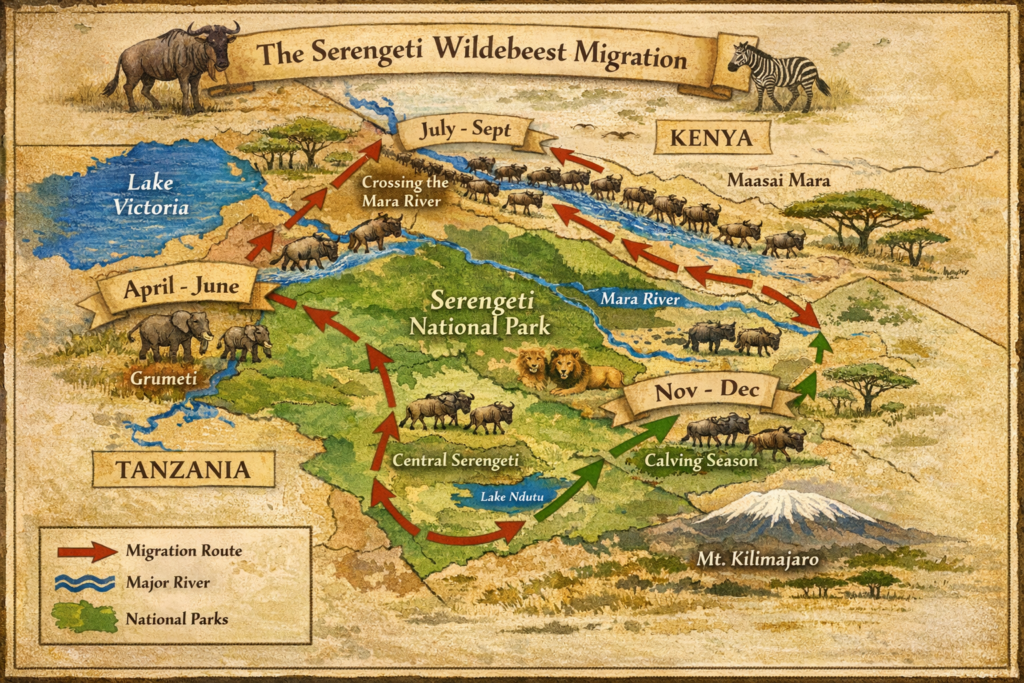
The Best Time For the Tanzania Safari is from June to October. The wildebeest migration, or the great migration Serengeti, takes place from June to July. The wildebeest calving occurs in January and February. Both of these happen in the Serengeti National Park. These are the most fabulous safaris. And by far the Best wildlife safaris in Tanzania. There are very high probabilities of sighting the Big Five! That should address your question: which safari is best in Tanzania?
- The Busiest Time:From July to March, the parks on the northern circuit are pretty busy.
- The Low Season:The northern circuit parks get many visitors. April and May are the low seasons.
- The Best Weather:June through October, when it rarely rains.
- The Worst Weather:The worst time for a Tanzania wildlife safari is during the rainy season during March and April.
Dry Season: June to October
The months of June and July are ideal for viewing the wildebeest migration. August and September are the ideal months to view wildebeest crossing the Mara River in Northern Serengeti. They congregate around waterholes and the river. There is less foliage in Safari National Parks, and animals are easier to see. Because there is little to no rain, the sky is clear, and most days are bright, so there are fewer mosquitoes. Except for the Seronera region in the Serengeti and the Ngorongoro Crater, the parks are not particularly congested though most tourists visit throughout the season. When going on early game drives in open cars in June, July, and August, it’s a good idea to pack warm clothing. The mornings and evenings get chilly.
Wet Season: November through May
At the southern Serengeti, calving occurs around January and February. It is also a fantastic period to observe predatory animals in action. The environment is lush and lovely. The low season means reduced prices and less crowding in the parks. On a Wildlife safari in Tanzania, it is simpler to recognize the animals according to the season. There are a lot of species there. And most northern circuit parks provide excellent wildlife watching all year long.
The best time to go bird-watching is when many migratory birds are around.
Except in March, April, and May, rains are brief afternoon showers and do not disrupt your travel plans. March through May, see the wettest weather with the heaviest downpour. Visitors may enjoy seeing animals on the Serengeti and Ngorongoro safaris all year. June and July are ideal for viewing the wildebeest migration. February is the most acceptable month to witness a wildebeest calf. In Tanzania, the dry season makes for excellent wildlife watching. A good time to visit Tarangire Park is between June and October.
Great Wildebeest Migration – Serengeti Safari
Only in East Africa can you see the wonder of The Great Migration on a Serengeti safari excursion. In the ideal months, June and July, you will most likely see the wildebeest migration in the Serengeti. July through October are the best times to view the migration. Predators await on land and water as the animals cross the Mara River. It creates a storm for a thrilling safari experience, the spectacle of thousands of grazing animals crossing fields and rivers. Giving birth and concluding their yearly journey is enlightening and emotional. The big five constitute the quintessential safari experience.
Which nation gives the total views? Tanzania! Which safari is better Kenya or Tanzania? Kenya and Tanzania can boast of being among the best places in the world for animal encounters. On an African safari, they are home to the Great Migration, which is famous worldwide. Tanzania has the edge over Kenya if you compare countries based on the number of animals in Tanzania safari.
January-February-March (The Calving Season)
During this time many herds of wildebeests and zebras are around the Ngorongoro Conservation Area and in the Southern plains of the Serengeti, the grass there is short and rich, so most pregnant wildebeest find there stay here. The calving season starts at the end of January to mid March; around 600,000 calves are born in this time. Them being born in large numbers it is easier to survive predators than those born few and earlier.
During this time from January to March, these wildebeest migration can be viewed comfortably at a mobile camp, though most mobile camps are faced with the issue of flies so clients who are in for camping are advised to go in for Lake Masek Tented camp, then also midrange travelers can opt for Ndutu lodge as they observe the migration. Those who are into the luxury basis can go for Mwiba lodge, which is located a few kilometers away from Ndutu area so private vehicles can be offered by the lodge to take you to the area to observe the migration.
April-May
By the end of March to early May, this is considered an off season for observing wildebeests and other animals at large because there are heavy rains in Tanzania by this time. The grass during this time grows so tall and also roads become hard to pass through since the soils are slippery.
At the start of May the grass is already reduced since the population of the animals is a lot, so they choose to migrate looking for more grass. Most of the wildebeests and zebras move to the North via Seronera and the West near Lake Victoria and Serengeti’s western corridor, by this time these areas have enough water and longer grass.
In April, there is a possibility of observing the migration and the better place to stay would be Kusini Camp but there are many tsetse flies so the other option would be Ndutu Safari lodge. Other facilities include; Serengeti Kati Kati camp, Osupuko tented camp, Serengeti Serena safari lodge, Serengeti wildlife lodge
We generally don’t advise you to travel during April and May.
June
Early June the wildebeests start to move westwards because there is no enough food where they were. They tend to move to River Grumeti, which is surrounded by a forest and in this forest there are lots of elephants, buffaloes and in the river are a number of hippos and big-starving crocodiles that are ready to eat the wildebeests that come to drink water from the river.
There are different places where one can stay and catch the migration. They range from luxurious lodges such as Sasakwa Hill Lodge, Faru Faru River Lodge and Sabora Plains Tented camp; while here you not only watch the migration but also can have drives off the road, wildlife viewing walks and night drives. Other accommodation facilities where to see the migration include; Kirarwa and Grumeti River camp but while here you cannot do night drives or off road drives.
July-August-September-October
By this time, the water and grass has totally reduced in Grumeti and in the Western Corridor so wildebeests start moving to look for more grassland. So there are chances of watching migration around the Singita Grumeti reserve in July but these chances reduce as the month ends.
At the end of July to mid October, the herds of wildebeests divide themselves into smaller groups residing in the North of Serengeti and in the Masai Mara, during this time if it’s a dry season the wildebeests gather around water bodies particular the Masai River, whereby this river also has hungry crocodiles ready to prey on those that come to drink water.
In mid to late October there are short rains; because of this the wildebeests start moving south of the Masai Mara in Kenya. So by this time the best place to view the migration is the Masai Mara though this reserve is smaller than the Serengeti. So while here, you will not only observe the migration but also you could visit the nearby Maasai communities that have been there for very many years.
During this period, you can observe the migration while staying at different lodges and Camps. Staying in northern Serengeti is advisable since most herds are there and also are in the Masai Mara. For those in need of a luxurious treat the Singita’s Mara River Tented Camp can work for you, another is Sayari camp which is a few minutes away from the wildebeest herds. Other accommodation facilities include; Nomad’s Lamai Camp, Lemala Kuria Hills, Olakira, Serian, Kimondo, and Governor’s Camp (found in the Mara) among others.
November-December
The rains continue throughout November so the wildebeests continue to move south and east. By December they start moving back to Southern Serengeti to the rich and short grasses. Most herds arrive by the end of December towards beginning of January which marks the end of that cycle.
Other areas in the Serengeti have tall grass growing at a fast rate hence making it difficult for wildlife viewing. So you are advised not to travel at this time of the year especially if you are interested in game safaris.
If you choose to travel during this time of the year, you can catch the migration while staying at Namiri Camp, staying in this area is an added advantage because it has different animals such as the cheetahs and lions. Nonetheless, it worth mentioning that because of these predators there are not many herds of wildebeests seen in this place. Also Klein’s camp could be better for viewing the migration but it has some tsetse flies.
After this cycle, the migration cycle begins again when the female wildebeests give birth to very many calves.
What Should I Pack For A Tanzania Safari?
Apart from your travel essentials like passport, vaccination identification, prescription medication and camera, you should pack some safari clothes and a few other items for a Tanzania Safari. Africa Safari clothing is best layered for various weather. Be sure to also bring along these items too:
Essentials
- Passport and visa documentation
- Yellow fever vaccination certificate
- Prescription medications
- Travel insurance documents
- Camera with extra batteries/memory cards
Clothing (Neutral Colors Recommended)
- Long-sleeve shirts (sun/insect protection)
- Convertible trousers
- Comfortable walking shoes
- Wide-brimmed hat
- Light scarf (dust protection)
- Warm fleece or jacket (mornings can be cold)
- Swimsuit (many lodges have pools)
- Light rain jacket
- Smart-casual outfit for lodge dinners
- Comfortable underwear
- Sandals for relaxation
Pro Tips:
- Pack in soft-sided bags (15kg maximum for internal flights)
- Wear neutral colors: khaki, olive, brown, beige
- Avoid bright colors and white (attracts insects, spooks animals)
Is Tanzania Safe for Tourists?
Tanzania is generally safe for tourists, especially when traveling with organized tour operators. Here’s what to know:
On Safari: Very safe when with professional guides who know the parks and wildlife behavior.
In Cities: Exercise standard precautions—avoid displaying valuables, use hotel safes, and be aware of pickpockets in crowded areas like Arusha and Dar es Salaam.
Health Considerations:
- Malaria prophylaxis recommended
- Yellow fever vaccination required if arriving from endemic countries
- Drink bottled water only
Our Safety Measures:
- All vehicles equipped with medical kits
- AMREF Flying Doctors emergency evacuation coverage
- 24/7 support hotline
- Experienced guides with first aid training
Is Tanzania dangerous for tourists?
Tanzania is safe to visit, especially if you’re travelling as part of an organised tour. Guides are travel specialists and will know which areas to avoid. Pickpocketing and theft are common in big cities, but are less of a concern while on safari in more remote parts of Tanzania.
If you are visiting Tanzania alone, it would be wise to take a reliable local guide with you on safari. You should ask the hotel management about the areas you must avoid. It’s also a good idea to refrain from walking around alone and at night.
Why Travelers Trust East African Safari Guide as One of the Best Tanzania Safari Tour Operators
1. Professional Safari Guides
Our guides are trained wildlife experts with years of field experience. Every safari includes a certified guide who ensures safety, comfort, and excellent wildlife interpretation.
2. Comfortable & Premium Safari Vehicles
- 4×4 Toyota Land Cruisers
- Pop-up roofs
- Charging stations
- Drinking water included
- Window seats for all clients
3. Flexible & Personalized Itineraries
Every traveler is unique. We customize itineraries based on:
- Budget (luxury / mid-range)
- Travel dates
- Group size
- Safari preferences
4. Transparent Pricing
No hidden fees. No last-minute costs.
You pay exactly what is agreed upon.
Frequently Asked Questions About Tanzania Safaris and Tour Operators
How do I choose the best Tanzania safari tour operator?
Look for licensed operators registered with TATO (Tanzania Association of Tour Operators), experienced guides, reliable safari vehicles, strong online reviews, and transparent pricing. East African Safari Guide meets all international standards and is fully licensed.
Are your safaris private or group tours?
We offer both private safaris (for couples, families, solo travelers) and small group tours (maximum 6 guests per vehicle, ensuring everyone has a window seat).
What is included in your safari packages?
All packages include: accommodation, park fees, three meals daily, professional guide, 4×4 Land Cruiser, drinking water, soft drinks, and airport transfers.
Do you offer custom itineraries?
Yes! We customize all itineraries based on your travel dates, budget, interests, and group size. Contact us to design your perfect safari.
What’s the best time to visit Tanzania for safari?
The dry season (June–October) offers the best overall wildlife viewing. For the wildebeest migration, visit June–July. For calving season, January–February is ideal.
How much does a Tanzania safari cost?
Budget safaris start around $350 per person per night. Mid-range options run $500–$700 per night. Luxury experiences range from $1,000–$4,200 per person per night, all-inclusive.
Is Tanzania safe for solo travelers?
Yes, especially with organized tours. Our guides ensure your safety throughout, and we can arrange solo-friendly accommodations and activities.
What animals will I see on safari?
Tanzania offers Big Five viewing (lion, leopard, elephant, rhino, buffalo) plus cheetahs, giraffes, zebras, wildebeest, hippos, crocodiles, and 1,000+ bird species.
Book Your Tanzania Safari Itinerary Today
- Visitors who prefer to travel by roads, with small tours or private guides should choose a northern safari
- Visitors who want to escape into the wilderness should choose a southern safari
- If you want to see the wildebeest and the great migration, you should choose a northern safari
- You could easily expand this into a 10-14 day Tanzania safari itinerary to include more time in each place and visit other parks like the Selous Game Reserve.
- The cost of a Tanzania safari itinerary can vary greatly depending on several factors, including the length of the trip, the level of luxury and accommodations, the number of people in your group, the time of year, and the specific parks and activities you choose. Here are some rough estimates for a 7 -day Tanzania safari cost: Standard : $4,000 per person Luxury: $10,000 per person
- Children under the age of 12 tend to pay 50% of the adult rate, and children under 5 tend to be free of charge.
Booking Conditions
We request a 30 % deposit to secure your safari. There is no deadline for this but we will not secure the accommodations and reserve the staff and vehicle until a deposit has been made. Deposits can also be transferred for use by another person. We accept online payments and bank wire transfers directly into our bank account. The remaining balance is not due until the start of your safari.
After booking we are still capable of making changes in the itinerary around what is possible with the accommodations.
TANZANIA SAFARI NATIONAL PARK FEES:
National Park fees are valid for 24 hours period from the time of entry. On all our calculation, we have included one park fees per person per day. In the case of clients delay, clients will be responsible for paying the extra park fees.
Please note
The operator may reroute the Tanzania Safari itinerary or accommodate in similar budget lodges or campsites in case of non-availability.
Single traveller supplement and child rates will be quoted on request.
An optional balloon safari can be booked at an additional expense for travel whilst in Serengeti National Park.
Rates are as accurate as possible. We may be able to get lower rates so if you’ve seen it cheaper elsewhere, we more than likely will be able to get the same rate for you (or even better).
Children and Third Adults
Children age 12 and younger pay 75% of the adult price when sharing with 2 adults
Children age 12 and younger in own room pay 85 % of adult rate
Third adult sharing (third adult only) pays 95% when sharing with 2 other adults
There are no reductions on supplements.
The following Booking Conditions, together with the General Information contained on our website, form the basis of your contract with East African Guide, trading as Tanzania Safari tour operators. Please read them carefully as they set out our respective rights and obligations. By confirming your booking, we are entitled to assume that you have had the opportunity to read and have read these booking conditions and agree to them.
Book with One of the Best Tanzania Safari Tour Operators
Choose East African Safari Guide for your ultimate Tanzania safari experience. As one of the best Tanzania safari tour operators, we guarantee safe, memorable, and professional safari adventure